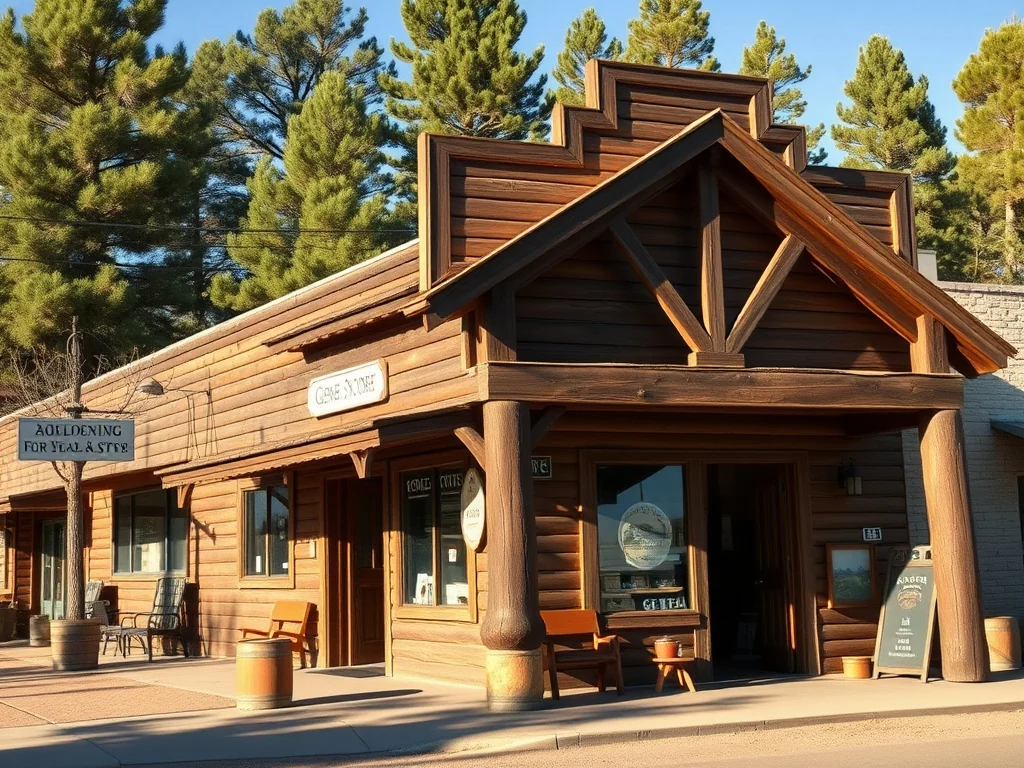
Business & Commercial — Happy Jack & Rim Country, AZ
Business & Commercial Insurance for Rim Country
The rim runs on small operators — the builder, the tree crew, the well driller, the plow guy, the outfitter, the corner store. We shop multiple carriers to build coverage around how your business actually works up here, seasonal swings and all.
Coverage for the businesses that keep the rim running
Rim country doesn't have a downtown so much as it has the people who make life up here work — the general contractor framing a cabin off a forest road, the crew thinning fuels before fire season, the well and septic guys, the snow-removal outfit that clears driveways all winter, the little store, the diner, the hunting guide, the folks renting out cabins. They are almost all small, often seasonal, and frequently run out of a home or a work truck.
That's exactly the kind of business national carriers and online quote engines handle badly. They want a tidy category, and a one-owner operation that builds in summer, plows in winter, and does a little fuels-reduction work on the side doesn't fit a box. As an independent agency, we don't force your business into a template — we match it to carriers that actually want rim-country trades, tourism, and seasonal operations, and we shop it so you're not overpaying for the privilege. Whether you need a single general liability policy or a full commercial program, we build it around what you really do.
General liability and the BOP
General liability is the foundation of almost every business policy. It covers third-party bodily injury and property damage — a customer who slips in your shop, a mistake on a job site that damages a client's home, the everyday claims that come from doing business around other people's property and persons. For most rim-country operations it's the first coverage to put in place and the one a client or landlord will ask you to prove you carry.
A business owner's policy, or BOP, bundles that general liability together with commercial property coverage — and usually business-income coverage — into one package that's priced better than buying the pieces separately. It's the workhorse policy for shops, small offices, and many home-based and seasonal businesses. Bigger or more complex operations often outgrow a standard BOP and move to a custom commercial package built line by line, but for a lot of rim businesses the BOP is the right, economical starting point.
- General liability — third-party injury, property damage, and the legal defense that comes with a claim.
- BOP — general liability plus commercial property and business income, bundled at a better price than standalone policies.
Commercial property — shops, cabins for hire, storage, and equipment
If your business owns or rents a building, stocks inventory, or runs on tools and equipment, commercial property coverage is what pays to repair or replace it after a fire, theft, storm, or other covered loss. Up here that means the storefront and its contents, a shop or pole barn full of tools, a rented cabin you run as lodging, cold-weather inventory, and the gear a trade lives or dies by.
Rim-country property carries rim-country risks, and they belong in the conversation. Wildfire and smoke, heavy winter snow load on roofs and outbuildings, wind, and freeze-and-burst pipes in a building that sits cold all season are real exposures for commercial buildings, not just homes. And note that Arizona has no state FAIR Plan — no government backstop for hard-to-place property — so when a building is tough to insure because of fire exposure, independent-agent access to multiple carriers and the surplus-lines market is what gets it covered. We make sure limits reflect what it would actually cost to rebuild and re-equip up here, not a lowball national estimate.
Trades and contractors
The building trades are the backbone of the rim economy, and they carry some of its heaviest exposures. General contractors and the specialty trades under them, tree and fuels-reduction crews working around structures and power lines, well drillers and septic installers digging on other people's land, excavators, and winter snow-removal operators all face real liability every day on the job — property they can damage, people who can get hurt, and work a client can later claim was done wrong.
We build contractor programs to match the actual work. That usually starts with general liability sized to the trade, adds tools-and-equipment coverage for what rides in the truck and trailer, and layers in extras the job or the client contract demands.
- General liability tuned to the trade — builders, tree and fuels work, well and septic, excavation, snow removal.
- Tools and equipment (inland marine), completed-operations coverage, and additional-insured endorsements when a client or GC requires them.
Commercial auto and trailers for work trucks
Here's the gap that catches rim-country business owners off guard: a personal auto policy generally excludes business use. If you're using the truck to haul tools to job sites, carry materials, tow a work trailer, or plow driveways for pay, a personal policy can deny the claim after an accident on the clock — leaving you personally on the hook for the truck and any damage or injuries. Business use of a vehicle needs commercial auto.
Commercial auto covers the trucks, and the liability and physical-damage coverage extend to the trailers, plows, and toy haulers that do the work with them. It handles the long hauls to town, the forest-road two-tracks, the snow and ice, and the deer and elk that make rim-country driving its own animal. If you run more than one vehicle, we can write them on a fleet basis. And when a truck lives a double life — personal on weekends, work during the week — we make sure it's rated and covered for both so there's no ugly surprise at claim time.
Workers' comp in Arizona
Arizona law requires workers' compensation insurance for businesses that have employees — and the state reads that broadly, so part-time, seasonal, and casual workers generally count. There are only narrow exceptions, and misclassifying a worker to dodge coverage is a costly bet: an uninsured injury can mean paying the medical bills and lost wages out of pocket, plus penalties. If you hire help, even seasonally, workers' comp is not optional.
The nuance that trips people up is the sole proprietor and the independent contractor. An owner with no employees often isn't required to carry comp on themselves, and true independent subcontractors carry their own — but if the state or a court decides your "subcontractor" was really an employee, the obligation lands back on you. That's a common exposure for rim-country trades that scale up a crew for the busy season. We help you classify workers correctly, price comp by the right class codes, and coordinate with the general liability and commercial auto so the whole program fits together.
Lodging, guiding, outfitting, and tourism
The pines pull visitors year-round, and a whole layer of rim businesses exists to host them — cabins and lodges for hire, hunting and fishing guides, outfitters, ATV and trail-tour operators, campgrounds, and the shops and eateries that feed the traffic. These operations put paying guests into the outdoors and into your buildings, which makes liability the center of gravity: a guest hurt on a guided outing, a slip at the lodge, an injury on a rented UTV.
Coverage here has to follow the guests and the activity. Lodging and cabins-for-hire need commercial property plus liability that contemplates paying occupants — and if you're renting a cabin short-term, that crosses into vacation-rental territory, which we handle as its own coverage. Guides and outfitters need liability written for taking clients into the field, and often carry participant coverage for the activity itself. Because appetite for this class shifts with the season and the specific activity, our multi-carrier access is what keeps it insurable and fairly priced.
Seasonal and home-based rim businesses
Most rim businesses aren't nine-to-five, year-round storefronts, and their insurance shouldn't be priced as if they were. Work stacks up in the warm months and thins out under the snow; a plow operation is the mirror image, dead all summer and slammed all winter. Many owners run the whole thing from home or from the cab of a truck. A policy that ignores all that either overcharges you for months you're barely working or leaves a gap in the season that actually pays the bills.
We tailor coverage to that rhythm. That means matching limits and, where it helps, coverage periods to your busy season, and it means catching the classic home-based blind spot: a homeowners policy typically excludes business activity, so tools, inventory, and business liability run out of the house usually need their own commercial coverage. Bring us the real picture — everything you do, and when you do it — and we'll build a program that flexes with the year instead of fighting it.
- Limits and coverage timed to your busy season rather than a flat, year-round assumption.
- Commercial coverage for the business tools, inventory, and liability your homeowners policy excludes.
Get a business quote
Quoting a rim-country business well takes an honest description of everything you actually do — the main trade and the side work, whether you have employees or seasonal help, what vehicles and trailers you run, whether you own or rent your space, and how your year rises and falls. The side activities are where the coverage gaps usually hide, so tell us about all of them, even the ones that only fire up a few weeks a year. If you carry any policies now, send the declarations pages and we'll show you a straight comparison instead of a mystery number.
Call 844-967-5247 or start the quote form, and we'll shop your business across multiple carriers to find the right fit and a fair price. We insure operations throughout the rim country — Happy Jack, Pine, Strawberry, Payson, Mormon Lake, Munds Park, Clints Well, Blue Ridge, and Forest Lakes — and we build coverage the way a neighbor would, around the business you're really running.
Business Insurance FAQs
Common questions from rim-country clients
Almost every business starts with general liability for third-party injury and property damage, and many bundle it with commercial property into a business owner's policy (BOP). From there it depends on the operation: workers' comp if you have any employees, commercial auto if you use vehicles for work, and coverage for tools and equipment for the trades. We build the mix around what you actually do rather than a generic package.
Yes — Arizona requires workers' compensation for businesses that have employees, and that includes part-time and seasonal workers, with only narrow exceptions. A sole proprietor with no employees generally isn't required to cover themselves, but if you hire any help, even for the busy season, you need comp. Going without it can mean paying an injured worker's medical bills and lost wages out of pocket, plus penalties.
General liability is a single coverage — it pays for third-party bodily injury and property damage your business causes. A BOP, or business owner's policy, is a bundle: it combines that general liability with commercial property coverage (and usually business income) in one package that's priced better than buying the parts separately. If you own or rent a building or carry inventory and equipment, a BOP usually beats standalone general liability.
Almost certainly. Personal auto policies generally exclude business use, so if you're hauling tools and materials, towing a work trailer, or plowing for pay, a personal policy can deny the claim after an accident on the job — leaving you personally responsible for the truck and any damage or injuries. Business use of a vehicle needs commercial auto, and it extends to the trailers and plows the truck works with.
Yes — that's a lot of what we do up here. Seasonal trades, home-run operations, and one-truck outfits are the norm in rim country, and we match limits (and where it helps, coverage periods) to your busy season instead of a flat year-round rate. We also catch the common home-based gap: your homeowners policy typically excludes business activity, so the tools, inventory, and liability run out of the house need their own commercial coverage.
Ready to compare business options?
One conversation, multiple carriers compared — from the cabin in the pines to the truck, the side-by-side, and the land.