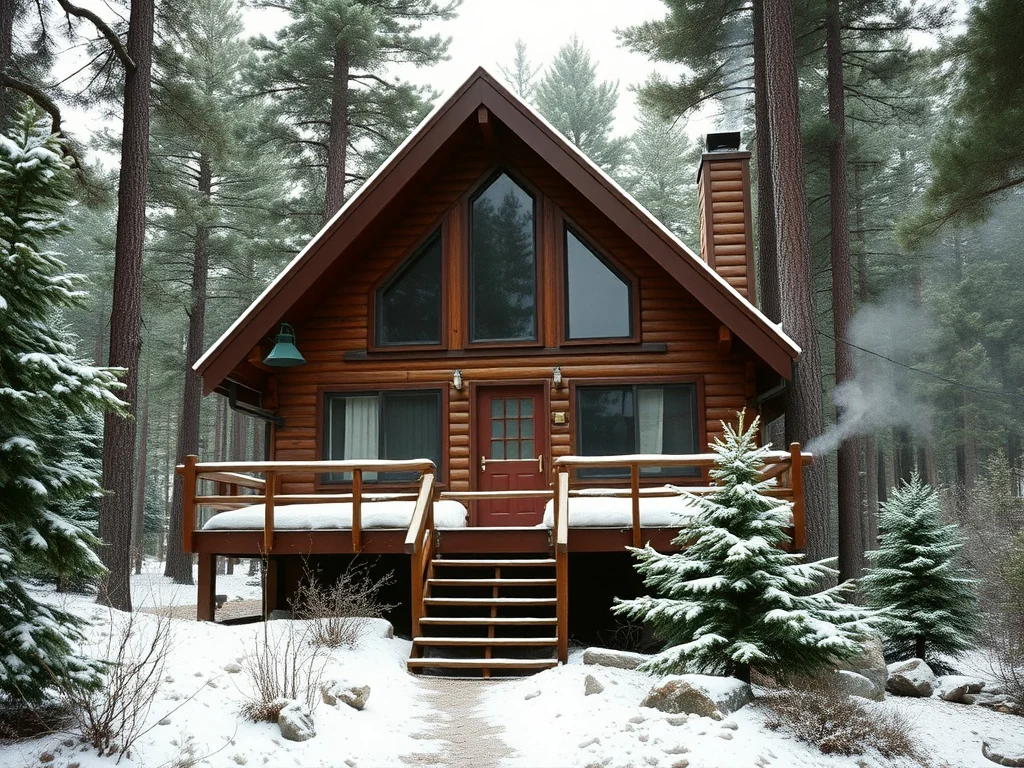
Cabin & Seasonal Home Insurance - Happy Jack & the Rim
Cabin, Seasonal & Vacation-Home Insurance for Rim Country
A cabin you visit on weekends isn't a primary home, and standard carriers know it. We write seasonal and second-home policies built for how rim-country cabins actually get used - empty half the year, buried in snow, and surrounded by pines.
Coverage for the cabin you don't live in year-round
Up here, a lot of the homes in the pines aren't anybody's full-time address. They're the weekend place, the summer escape from the Valley heat, the family cabin that's been passed down. That's exactly the kind of property national quote engines fumble - they price it like a primary residence, then either overcharge you or write a policy that quietly won't respond when you need it.
A cabin or seasonal-home policy is its own thing. It accounts for the fact that nobody's there most of the time, that the place gets closed up for winter, and that when something goes wrong - a pipe lets go, a tree comes down, a break-in - days or weeks can pass before anyone notices. Coverage still covers the same bones as a homeowners policy: the dwelling, other structures, your belongings, personal liability, and loss of use. What changes is how each one gets sized and worded for a home that sits quiet.
As an independent agency, we shop this across multiple carriers instead of forcing your cabin into one company's box. Some carriers love a well-kept seasonal cabin; others run from it. Knowing which is which is most of the job.
Seasonal / secondary home vs. primary home policies
The difference between a primary-home policy and a seasonal one comes down to occupancy - how often someone actually lives there. Your primary home is where you spend most of the year and get your mail. A seasonal or secondary home is used part-time and left unoccupied for stretches. Carriers treat those as genuinely different risks, because they are.
If your rim-country cabin is your second home, insuring it on a policy that assumes you live there full-time is a mistake in both directions. You may pay for coverage that doesn't fit, and worse, if a claim happens while the place was sitting empty, an occupancy misstatement can give the carrier a reason to push back. Being straight about how the cabin is used - primary, seasonal, or rented sometimes - is what keeps the policy honest and payable.
- Primary home: lived in most of the year, standard homeowners (HO-3) territory
- Seasonal / secondary home: used part-time, closed up for stretches, needs a policy that expects the vacancy
- Rented out at all: crosses into business use - a different conversation (see our vacation-rental coverage)
Why vacancy changes the risk - and the price
An empty house is a riskier house, and insurance pricing follows risk. When nobody's around, small problems become big ones. A slow drip runs for a month instead of an afternoon. A furnace quits in January and the pipes freeze before anyone knows. A break-in goes undiscovered until the next visit. That gap between when something breaks and when someone catches it is the whole reason seasonal cabins are underwritten differently.
That's also why the word "vacancy" matters so much on these policies. Many standard homeowners forms cut back or exclude coverage once a home has been vacant beyond a set window - often 30 or 60 consecutive days - for exactly the losses seasonal cabins face, like water damage, vandalism, and theft. A seasonal policy, or the right endorsement, is written to expect the cabin to sit empty and keeps coverage in force while it does.
- Vacancy clauses can suspend water-damage, vandalism, and theft coverage after a set number of empty days
- A true seasonal policy is built around the vacancy instead of penalizing you for it
Log cabins & unique construction
Rim country is full of homes carriers file under "non-standard" - full log builds, timber-frame, A-frames, post-and-pier foundations, wood stoves as the main heat, off-grid solar and generator setups, additions built by hand over the years. None of that makes your cabin worse. It just means the national rating models don't know what to do with it, so the easy answer they give is a decline or a sky-high quote.
Log and timber homes carry real considerations - they're valued and rebuilt differently than stick-frame, wood heat changes the fire picture, and replacement cost for hand-scribed logs isn't something a generic calculator gets right. The fix isn't a bigger national brand; it's a carrier that actually writes log and non-standard construction, matched to a rebuild figure that reflects what your cabin would truly cost to put back. That's a placement we handle regularly up here, not an exception.
- Log, timber-frame, and A-frame builds valued on true log-replacement cost, not a stick-frame default
- Wood stoves, generators, and off-grid systems disclosed and rated - not hidden until claim time
Protecting a home that sits empty in winter
Winter is when a seasonal cabin earns its keep on the risk side. At around 7,600 feet, Happy Jack and the surrounding rim get real snow and hard freezes, and the cabin absorbs all of it with nobody inside. Frozen and burst pipes are the classic rim-country winter claim - heat fails or the place was never fully winterized, water freezes, a line splits, and it runs until the spring visit. Snow load stacks on roofs and decks. Break-ins target homes that are obviously unoccupied. Any one of these can turn into a five-figure loss precisely because no one was there to catch it early.
Good coverage is half the answer; the other half is how you close the cabin up. Carriers care about both, and so do we - a policy that expects an empty winter home paired with basic precautions is what keeps these claims payable instead of contested.
- Freeze / burst-pipe coverage - and the winterizing steps carriers expect if the heat's off
- Snow-load damage to roofs, decks, porches, and outbuildings
- Theft and vandalism protection sized for a home that's visibly unoccupied
Wildfire & the seasonal cabin
Your cabin sits in the pines, which is the whole appeal and the whole exposure. Rim country is wildfire country - the Ponderosa forest that makes Happy Jack beautiful is the same fuel that makes carriers cautious. Being a seasonal home adds a wrinkle: you're not there to clear brush every week or move a propane tank before a red-flag day, so underwriters look even harder at defensible space and how the cabin is kept.
The good news is that a standard homeowners or seasonal policy generally does cover wildfire damage - fire is a core covered peril. The catch is being able to get and keep that policy at a fair price on a forested seasonal lot, and being insured to fully rebuild rather than to a stale number. Defensible space, a fire-resistant roof, and clearance around the structure aren't just safety - they're underwriting currency that can keep your cabin insurable. We dig into all of this on our wildfire coverage page, and we pair it with the seasonal write.
Renting it out sometimes? What that changes
A lot of rim-country cabin owners rent the place out a few weekends a year to help cover the taxes and upkeep. It feels casual, but the moment paying guests stay in your cabin, you've stepped into business use - and homeowners and standard seasonal policies exclude business use. That means a guest injury, guest-caused damage, or a liability claim tied to renting can be denied outright on a plain cabin policy, no matter how occasionally you do it.
This trips up good, careful owners constantly, because nothing about listing a cabin online feels like "starting a business." To the policy, it is one. If you rent at all - even a handful of nights - the coverage needs to account for it, which usually means a vacation-rental or short-term-rental policy layered onto or replacing the seasonal one. We cover exactly how that works on our vacation-rental page; the important thing is telling us you rent so we can close the gap before a guest ever finds it.
Keeping a cabin insurable - winterizing, monitoring, caretaker checks
The single best way to keep a seasonal cabin insurable and affordable is to shrink the window between when something breaks and when someone catches it. Carriers reward that, and honestly, so does your wallet - most seasonal claims up here are the slow ones that ran unnoticed. A little structure around how the cabin is closed and checked goes a long way with underwriters at renewal.
None of this is exotic. It's the same routine long-time rim-country owners already follow: shut the water off and drain the lines before winter, keep the heat set high enough to prevent freezing if you leave it on, and have someone lay eyes on the place regularly. Increasingly, carriers will credit remote monitoring - water-leak sensors, temperature alarms, and cameras that ping your phone - because they turn a month-long leak into a same-day text.
- Winterize: shut off and drain water lines, or maintain adequate heat, before the cabin sits empty
- Monitor: water-leak sensors, low-temperature alarms, and connected cameras - several carriers credit them
- Check: a caretaker, neighbor, or property manager doing regular documented walk-throughs
Cabin & Seasonal Insurance FAQs
Common questions from rim-country clients
It's a policy built for a home that isn't lived in year-round - a cabin, weekend place, or summer home that sits unoccupied for stretches. It covers the same core things as a homeowners policy (dwelling, other structures, belongings, liability, loss of use) but is written to expect the vacancy instead of cutting back coverage the way a standard homeowners form can when a house sits empty.
Often, yes - a home that's empty much of the year carries more risk, because small problems like a leak, freeze, or break-in can go unnoticed for weeks. That said, price depends heavily on the cabin, and being with the right carrier for a seasonal property usually beats forcing a second home onto a primary-home policy. Winterizing, monitoring, and defensible space all help hold the premium down. As an independent agency, we shop several carriers to find the best fit.
Yes, with the right carrier. Log, timber-frame, A-frame, off-grid, and hand-built homes get labeled "non-standard" by national models, which often leads to a decline or an inflated quote. Specialty and regional carriers write these all the time - the key is valuing the cabin on true log-replacement cost and disclosing details like wood heat and generators up front. Placing non-standard rim-country construction is routine for us.
Many standard homeowners policies contain a vacancy clause that suspends or limits coverage - especially for water damage, vandalism, and theft - once a home has been unoccupied beyond a set window, often 30 to 60 consecutive days. That's a problem for a seasonal cabin that's empty all winter. A true seasonal policy, or the right vacancy endorsement, is written to keep coverage in force while the cabin sits quiet.
Yes. The moment you take paying guests, you've entered business use, and homeowners and standard seasonal policies exclude business use - a guest injury or guest-caused loss can be denied. Even renting a few weekends a year triggers this. You'll need vacation-rental or short-term-rental coverage layered on or in place of the seasonal policy. Just tell us you rent, and we'll structure it so there's no gap.
Ready to compare cabin & seasonal options?
One conversation, multiple carriers compared — from the cabin in the pines to the truck, the side-by-side, and the land.