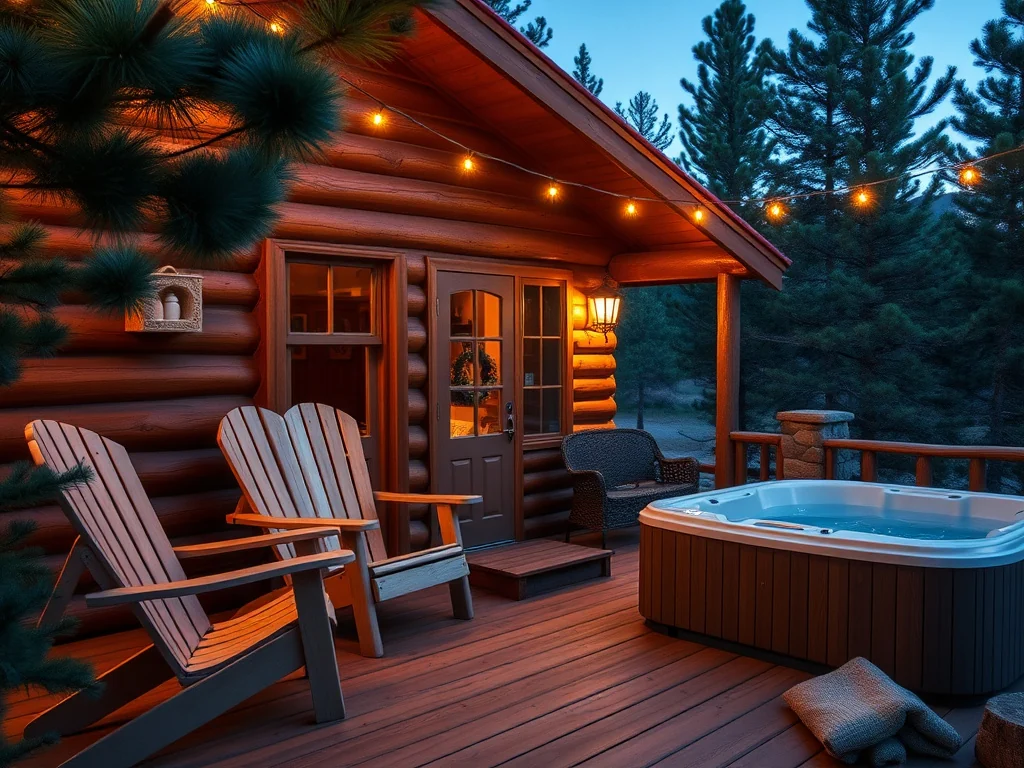
Vacation Rental / STR - Happy Jack & the Rim
Vacation Rental & Short-Term Rental Insurance
If paying guests stay in your cabin, you're running a business - and homeowners policies exclude business use. We write short-term-rental coverage that actually responds when a guest gets hurt, wrecks the place, or a fire empties your calendar.
Renting your cabin out? Your homeowners policy probably won't cover it
The rim-country cabin economy runs on short-term rentals. Owners list the family place on Airbnb or Vrbo to offset taxes, upkeep, and the mortgage, and guests come up for the pines, the cool summers, and the snow. It's a good arrangement - right up until a claim, when a lot of owners find out their coverage was never built for it.
Here's the hard part most people don't know: a standard homeowners policy - and even a seasonal or second-home policy - excludes business use. Renting your cabin to paying guests is business use. So a guest who slips on the icy porch steps, a guest-caused kitchen fire, or a party that trashes the place can be denied outright, because the policy was written for a family living in the home, not a hospitality operation. Discovering that exclusion after the fact is the expensive way to learn it.
As an independent agency, we place real STR coverage across multiple carriers, matched to how you actually rent - full-time, part-time, or a handful of weekends a year.
Why STR coverage is different - the business-use exclusion
Every homeowners and seasonal policy carries some version of a business-use exclusion. It's not fine print a carrier waives because you're a good customer - it's the core reason your regular policy can walk away from a rental claim. The insurer priced and underwrote a private residence. A cabin taking paying guests is a different risk with different exposures: strangers coming and going, higher liability, more wear, and turnover the policy never contemplated.
There's a second trap. Renting the cabin without telling your carrier doesn't just leave the rental activity uncovered - it can give the company grounds to question the whole policy, including losses that have nothing to do with a guest. If your cabin is listed and your agent doesn't know, you may not have the coverage you think you have on any of it. Short-term-rental insurance exists to close that gap on purpose, treating the rental as the business it legally is.
- Homeowners and seasonal policies exclude business use - paying guests count as business use
- Undisclosed rental activity can jeopardize the entire policy, not just the guest claim
What a vacation-rental policy covers
A proper short-term-rental policy is a commercial-landlord hybrid built for hosting. Instead of pretending guests don't exist, it's written around them - the extra liability, the wear, the income you'd lose if the cabin went offline. It's the difference between a policy that argues with you after a rental loss and one that pays.
Exactly how each piece is structured varies by carrier and by how much you rent, which is where shopping it matters. But a real STR policy is built to cover the things renting actually exposes you to.
- Property / dwelling and contents on replacement cost, including guest-caused damage beyond normal wear
- Commercial-grade liability for guest injuries - the icy step, the deck rail, the fire pit, the hot tub
- Guest injury and their damage to your property, the losses homeowners flatly excludes
- Lost rental income when a covered loss - fire, burst pipe, storm - takes your calendar offline
- Coverage that follows the booking across platforms - Airbnb, Vrbo, or direct
Airbnb / Vrbo "host protection" vs. a real commercial policy
Airbnb's AirCover and Vrbo's host protections get a lot of owners comfortable enough to skip real insurance. That's a mistake. These are host-protection programs the platform provides - they are not insurance policies you own and can enforce. They come with meaningful exclusions and actual-cash-value quirks, they only apply to bookings made through that platform, and they pay on the platform's timeline and at the platform's discretion, not under a contract you hold.
Read that again in claim terms: a direct booking or a repeat guest who paid you off-platform may fall entirely outside the program. A dispute gets decided by the company whose money is on the line. And a gap in what the program depreciates or excludes is your gap to eat. Treat platform protection as a backstop sitting behind a real STR policy - never as your primary coverage. When the two overlap, great; when the platform program bows out, your own policy is what's left standing.
- AirCover and Vrbo programs are host-protection arrangements, not owned, enforceable insurance policies
- They typically exclude off-platform and direct bookings and pay at the platform's discretion
Full-time STR vs. occasional rental
How you rent should drive the policy, and up here it runs the full range. Some owners operate a cabin as a year-round short-term rental - effectively a small lodging business with steady turnover. Others live in or use the cabin themselves and rent it only in peak weeks. Plenty just put it up a few weekends a year. Each of those is a different risk, and the right coverage looks different for each.
A full-time STR usually calls for a dedicated commercial or landlord-style STR policy sized to the income and the constant guest traffic. An occasional or seasonal rental can sometimes be handled with an STR policy or a home-sharing endorsement layered onto the underlying cabin coverage. What never works is assuming "I only rent a little" means the business-use exclusion won't bite - even a handful of nights triggers it. The point of matching the policy to your pattern is paying for what you need and being covered for what you actually do.
Wildfire, seasonal vacancy & guest-turnover risk for rim cabins
Insuring a rim-country STR stacks three of the harder exposures on one property. It's a forested, high-fire-risk cabin. It's often seasonal, sitting empty between bookings the way any second home does. And it has strangers cycling through it all season - more people, more liability, more chances for something to go wrong. That combination is genuinely tough to place, and it's exactly the placement we handle up here.
Wildfire is the one that turns theoretical fast. A fire or evacuation during peak season doesn't just threaten the structure - it can empty your booking calendar overnight, and whether that lost income is covered depends entirely on how the policy's business-income and civil-authority language is written. Seasonal vacancy raises the odds an unnoticed freeze or leak ruins a stretch of bookings. Guest turnover raises the liability baseline. A good STR write accounts for all three instead of pretending a rim cabin rents like a condo in town.
Is vacation rental insurance worth it? What it costs
For anyone taking paying guests, yes - the math isn't close. A single denied guest-injury liability claim, or one guest-caused fire your homeowners carrier walks away from, dwarfs years of STR premium. The whole reason the coverage exists is that the losses it handles are the ones that can wipe out the income the cabin was supposed to generate in the first place.
Cost depends on real factors, not a flat rate: the cabin's value and rebuild cost, how much you rent, your liability limits, amenities like a hot tub or fire pit, and the wildfire and construction picture of the property. An occasional rental typically costs less than a full-time operation. We won't quote you a made-up number here - what we'll do is shop it across carriers that actually write rim-country short-term rentals and show you the real figure for how you rent, so you're comparing true coverage against true price.
- Priced on cabin value, rental frequency, liability limits, amenities, and wildfire / construction risk
- One denied guest-liability or guest-caused-fire claim generally exceeds years of premium
Get a vacation-rental quote
If you're buying, converting, or already running a short-term rental in the rim country, the sequence is simple: tell us the cabin's address, how you rent it - full-time, seasonal, or a few weekends - and which platforms you list on, and put real STR coverage in force before the next guest checks in. If you have a current declarations page, send it and we'll show you line by line where the rental gap is and what it takes to close it.
Because we're independent, we're not selling you one company's product - we shop your cabin across the carriers that actually write rim-country short-term rentals and bring you back the options that fit how you rent and what you want to protect. No pressure, no jargon, and no made-up numbers. Just a straight answer from folks who know these pines and these winters.
Start online or call 844-967-5247. We insure vacation rentals and short-term-rental cabins across Happy Jack, Pine, Strawberry, Payson, Mormon Lake, Munds Park, Clints Well, Blue Ridge, and Forest Lakes - all across rim country.
Vacation Rental / STR Insurance FAQs
Common questions from rim-country clients
You need short-term-rental (STR) or vacation-rental coverage - not just a homeowners or seasonal policy, both of which exclude business use. A real STR policy covers the dwelling and contents including guest-caused damage, commercial-grade liability for guest injuries, and lost rental income when a covered loss takes your cabin offline. Because renting is business use, that guest-facing protection is the whole point.
For anyone taking paying guests, yes. A single denied guest-injury claim or a guest-caused fire your homeowners carrier walks away from can cost far more than years of STR premium. The coverage exists precisely because the losses it handles - guest liability, guest damage, lost income - are the ones big enough to wipe out what the cabin earns. Skipping it to save a little is the expensive gamble.
It depends on the cabin's value and rebuild cost, how often you rent, your liability limits, amenities like a hot tub or fire pit, and the property's wildfire and construction risk. An occasional rental generally costs less than a full-time operation. We don't quote a flat number - we shop it across carriers that write rim-country short-term rentals and show you the real figure for how you actually rent. Call 844-967-5247 to get started.
Not adequately. Airbnb's AirCover and Vrbo's host protections are host-protection programs the platform provides, not insurance policies you own and can enforce. They carry real exclusions and actual-cash-value quirks, typically don't cover off-platform or direct bookings, and pay at the platform's discretion. Treat them as a backstop behind a real STR policy - never as your primary coverage.
Yes. The business-use exclusion in homeowners and seasonal policies kicks in the moment you take paying guests, even for a single weekend - so a guest injury or guest-caused loss can be denied no matter how rarely you rent. An occasional rental can often be handled with an STR policy or a home-sharing endorsement, and it costs less than a full-time write. Just tell us you rent so we can close the gap.
Ready to compare vacation rental / str options?
One conversation, multiple carriers compared — from the cabin in the pines to the truck, the side-by-side, and the land.