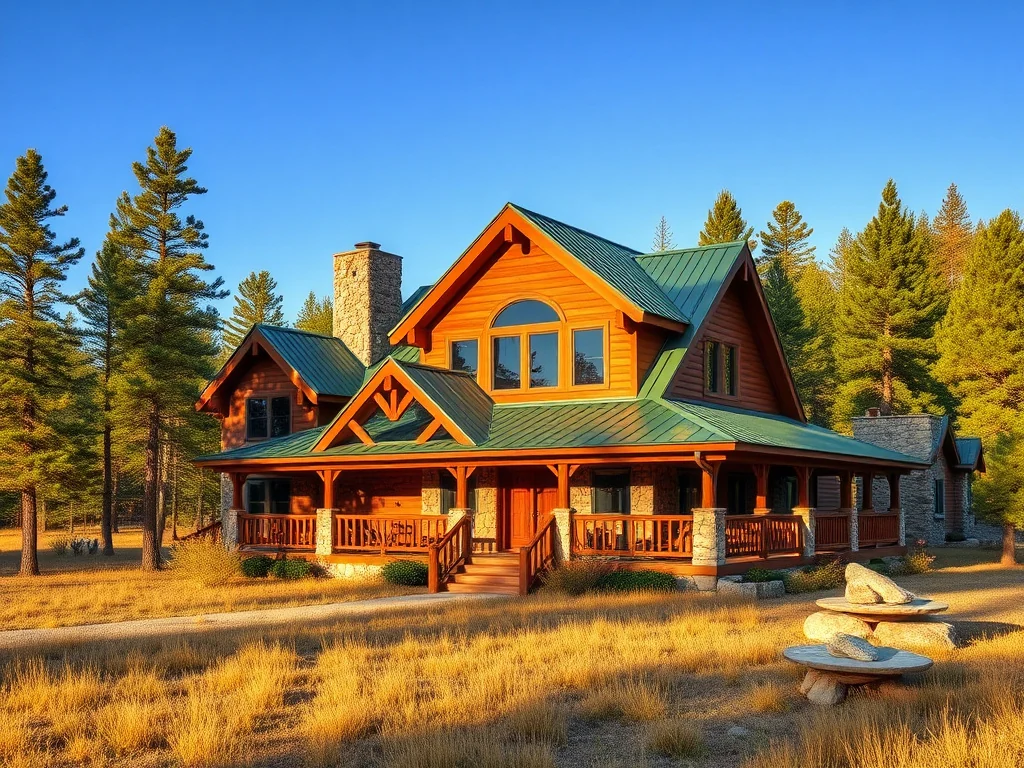
Homeowners Insurance — Happy Jack & the Mogollon Rim
Homeowners Insurance for Rim Country Homes
Living at 7,600 feet in the Ponderosa pines is a different kind of homeownership — and it needs a different kind of policy. We shop multiple carriers to build coverage that understands wildfire, snow load, and the cost of rebuilding up here.
Home insurance built for life in the pines
Owning a home in Happy Jack and the rim country isn't like owning one down in the Valley. You're up around 7,600 feet in the Ponderosa pines, ringed by the Coconino National Forest, with snowy winters, monsoon wind and hail, wildfire season, and elk and deer wandering through the yard. The house that shrugs all of that off is a well-built one — and the policy that protects it has to be built with the same care.
A national quote engine doesn't know any of that. It prices your home off a ZIP code and a square-footage guess, then hands you a number. We start the other direction: what your home is made of, how far it sits from the forest line, how it handles snow and freeze, and what it would genuinely cost to rebuild if the worst happened.
As an independent agency we don't answer to one carrier. We shop your home across several, compare what each one covers and how each one pays at claim time, and put the honest options in front of you. That's the whole point of working with a local agent who lives and works in rim country — we know what these homes need because we insure them every week.
What a rim-country homeowners policy covers
The frame of a standard homeowners policy is the same everywhere — it's built on a handful of coverages that work together. What changes up here is how each one has to be sized and written so it actually holds up in the pines. Here's what the pieces do:
- Dwelling — rebuilds the house itself after a covered loss like fire, wind, or a fallen tree; the number here should reflect rebuild cost, not market value
- Other structures — covers detached garages, sheds, wells, barns, and fences that aren't attached to the home
- Personal property — replaces your belongings inside, from furniture to tools to the gear in the mudroom
- Liability — protects you if someone is injured on your property or you're found responsible for damage
- Loss of use — pays for a place to stay and added living costs if your home is uninhabitable after a covered loss, including a wildfire evacuation
Coverage rim-country homes actually need
The standard coverages are the foundation, but rim country stacks its own hazards on top — and this is where a policy either fits or falls short. Wildfire is the big one: a homeowners policy covers fire, including wildfire, as a named peril, and getting that coverage placed and priced right is the heart of protecting a home in the pines. But it's not the only thing this landscape throws at a house.
Winter at elevation brings heavy snow load on roofs, and freezing temperatures that split pipes and flood a home while you're away — a real risk for cabins that sit empty part of the year. Monsoon season brings wind, hail, and lightning. And the wildlife that makes it beautiful up here can also do damage. The point is to match the policy to the place, line by line, so nothing that's likely to happen up here is quietly left out.
- Wildfire — covered as a fire peril; the key is placement, adequate rebuild limits, and defensible-space credits (see our wildfire-aware coverage)
- Wind and hail — monsoon storms damage roofs and siding; know whether your roof pays replacement cost or depreciated value
- Snow load and ice — the weight of a heavy rim-country winter, plus ice-dam and freeze damage
- Freeze and burst pipes — a leading cause of loss in homes left unheated through a cold snap
- Wildlife damage — elk, deer, and bears can damage structures; coverage depends on the cause and your policy form
Replacement cost vs. actual cash value — why it matters up here
Two policies can look identical on price and be worlds apart when you file a claim, and the reason usually comes down to one setting: replacement cost versus actual cash value. Replacement cost pays to repair or rebuild with new materials of like kind and quality. Actual cash value (ACV) pays that same amount minus depreciation for age and wear — so a fifteen-year-old roof destroyed by hail pays out as a fifteen-year-old roof, not a new one.
That gap gets expensive fast in rim country. Rebuilding here means hauling materials up the mountain, a limited pool of local contractors, and prices that surge after any regional disaster when everyone needs a builder at once. An ACV settlement on a total loss can leave you tens of thousands short of what the rebuild actually costs.
We push for replacement cost on the dwelling, and we make sure the dwelling limit reflects a real rebuild — not the tax-assessed value and not what you paid. On roofs especially, we'll tell you plainly whether a carrier is quoting replacement cost or ACV, because that single line can be the difference between a claim that makes you whole and one that doesn't.
How wildfire risk affects your home policy
There's no getting around it: homes in the pines are rated as high wildfire risk, and that shapes everything about the policy — whether a carrier will write it, what it costs, and which company will even look at it. Carriers now score wildfire risk home by home using vegetation data, slope, distance to the forest boundary, and road access, not just by town. Two neighbors on the same road can get very different answers.
This is exactly where an independent agency earns its keep. When a standard carrier declines a rim-country home, we know which other carriers still have appetite for it, and we know how to present the mitigation you've done so an underwriter says yes. Documented defensible space and Firewise steps can turn a decline into an offer, and can earn credits on the policy you do get.
Because wildfire is the defining issue for homes up here, we've built a whole page around it. If your home is close to the forest, has been non-renewed, or you just want to understand your options, start with our wildfire-aware home coverage — then let's talk about your specific address.
Insuring outbuildings, wells, septic, and detached garages
Rim-country properties are rarely just a house. There's the detached garage, the shop, the barn, the well house, the septic system, the woodshed, and the fence line — and how each one is covered depends on the policy. Detached structures generally fall under your other-structures coverage, which is often set at a default percentage of your dwelling limit. On a property with a big shop or multiple outbuildings, that default is frequently too low, and we'll raise it to match what you'd actually have to rebuild.
Wells and septic deserve a specific conversation. A private well pump, pressure tank, and water lines can be damaged by freeze, lightning, or mechanical failure, and coverage varies a lot between policies and carriers. Septic systems are similar — some damage is covered, some isn't, and the fine print matters. Because so many rim-country homes run on their own well and septic instead of city utilities, we treat these as core coverage, not an afterthought.
The goal is that nothing on your property is a surprise at claim time. We walk the whole parcel with you on paper — every structure, every system — so the policy reflects the real place, not just the address.
Discounts and ways to lower your premium
Insurance up here isn't cheap, but there are real levers on the price, and most of them also make your home safer and more insurable. The biggest is bundling — putting your home and auto (and often your ATV, UTV, or trailer) with the same carrier usually earns one of the largest discounts available, and in a tight wildfire market a carrier will sometimes stretch on a home when the auto comes with it.
Wildfire mitigation is the other big one, because up here it's not just good sense — it's underwriting currency. Defensible space and Firewise steps can earn credits and, just as importantly, keep some carriers willing to write you at all. The rest add up: a newer roof, updated systems, monitored alarms, and a clean claims history all move the number.
- Bundling home and auto (and toys) with one carrier — usually the single largest discount
- Defensible space and Firewise USA participation — credits plus improved insurability
- A newer or Class A fire-rated roof, ember-resistant vents, and metal roofing
- Monitored alarm, smoke, and water-leak sensors — helpful given the freeze risk up here
- Higher deductibles, updated systems (roof, electrical, plumbing, heat), and a clean claims history
Why work with a local independent agent
When you call a 1-800 number, you get one company's appetite and one company's price — take it or leave it. When a rim-country home doesn't fit that one carrier's box, and plenty don't, the call center simply says no. That's a rough place to be when your mortgage requires coverage and fire season is coming on.
We work the other way. As an independent agency we represent multiple carriers, so one conversation with us produces several real options side by side. We know which companies actually want homes in the pines, how to document your home so an underwriter gets to yes, and how each carrier behaves when you have a claim — which is the part that matters most and the part a quote engine can never tell you.
We also live here. We know what a rim-country winter does to a roof, what a wildfire evacuation looks like, and what it costs to rebuild up the mountain, because these are our neighbors' homes. To get started, send over your current declarations page for a line-by-line comparison, use the online quote form, or call us at 844-967-5247. We serve Happy Jack, Pine, Strawberry, Payson, Mormon Lake, Munds Park, Clints Well, Blue Ridge, Forest Lakes, and the rim country in between.
Homeowners Insurance FAQs
Common questions from rim-country clients
A standard homeowners policy covers your dwelling, other structures (like a detached garage or well house), personal property, personal liability, and loss of use if your home becomes uninhabitable after a covered loss. Covered perils typically include fire and wildfire, wind, hail, lightning, theft, and many kinds of water damage from inside the home. Two big things are usually excluded — flood and earth movement — which need separate coverage.
There's no one honest number, because price depends on rebuild cost, roof age and type, distance to the forest, your wildfire score, deductibles, and mitigation. A home rated high for wildfire in the pines will run more than the same home in a low-risk area. What matters more than the premium is that the dwelling limit reflects real rim-country rebuild cost — not the market price you paid. We shop several carriers and show you the actual quotes side by side.
Flood and earth movement. Rising or surface water — flash floods, runoff, and post-fire debris flow — is excluded from every standard homeowners policy and needs a separate flood policy. Earth movement, including earthquake and landslide, is also excluded. Wildfire itself, though, is a covered fire peril, which is a common and important point of confusion for homes in the pines.
Generally yes. Standard homeowners policies cover sudden and accidental water damage from a burst pipe, and damage from the weight of ice and snow on your roof. But there's a catch that matters up here: if a home is left unoccupied and unheated and pipes freeze because the heat was off, a claim can be denied. For cabins and seasonal homes, keeping heat on or properly winterizing — and telling us how the home is used — protects the coverage.
Homes in the rim-country pines are rated high for wildfire, so yes, some carriers will decline them and prices run higher than in low-risk areas. But high risk is not the same as uninsurable. As an independent agency we know which carriers still write these homes, and documented defensible space and Firewise steps often turn a decline into an offer. See our wildfire-aware home coverage for the full picture.
Ready to compare homeowners options?
One conversation, multiple carriers compared — from the cabin in the pines to the truck, the side-by-side, and the land.