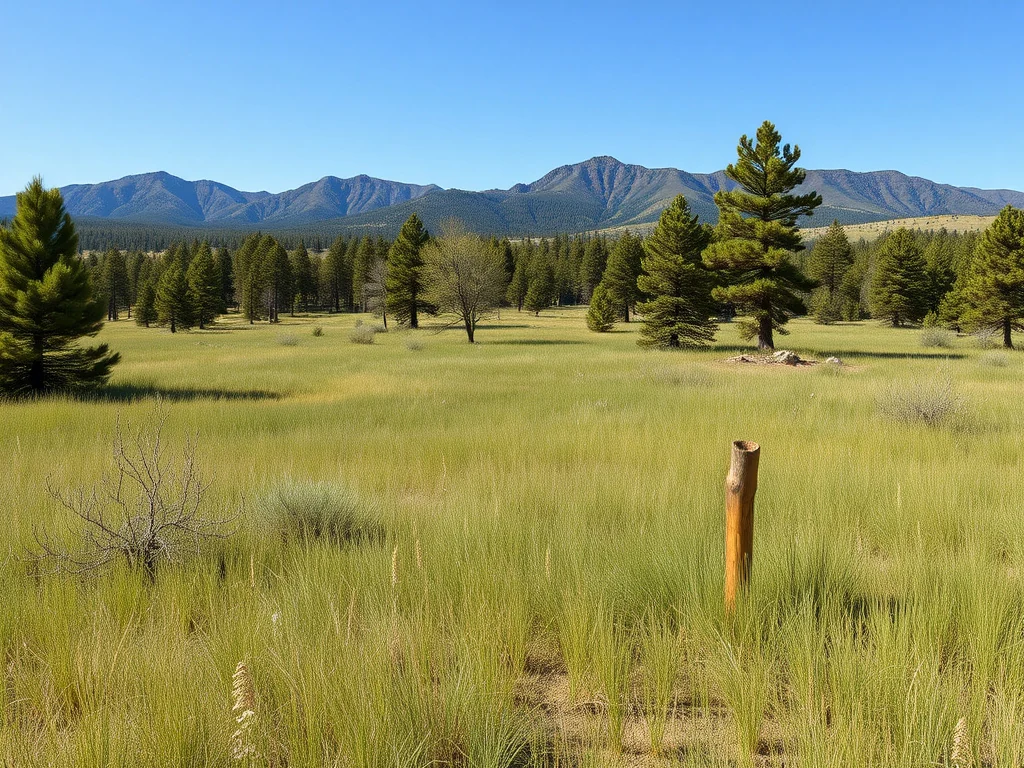
Vacant Land — Happy Jack & Rim Country, AZ
Vacant Land & Recreational Land Insurance
You bought a piece of the pines to build on someday, to camp on, or just to hold. There's no house on it yet — but if someone gets hurt out there, the lawsuit still has your name on it. Land liability is cheap, and it's the point.
Why bare land still needs insurance
It's an easy assumption up here: there's nothing on the lot, so there's nothing to insure. But insurance on vacant land was never about the dirt — it's about liability. If someone is injured on your parcel, you can be held responsible, whether they were invited, wandered over from the next lot, or cut through on the way to a trail. A twisted ankle in an old stock tank, a dirt biker who hits a hidden stump, a hunter who trips in a wash — any of them can turn into a claim against the landowner.
Around Happy Jack, lots sit next to Forest Service land, seasonal roads, and neighbors who are only up on weekends. People cross unposted property lines constantly. A vacant land liability policy pays to defend you and to cover a judgment if you're found liable for an injury or for property damage that started on your land. It is one of the least expensive policies we write, and for anyone holding a bare parcel in the rim country, it's the coverage that actually matters.
What vacant land insurance covers — and what it doesn't
A vacant land policy is a liability policy, first and foremost. It's built to respond when someone is hurt on your property or when something on your land damages someone else's, and it brings a legal defense along with the coverage — which matters, because defense costs alone can dwarf a modest claim.
What it is not is a property policy. There's no structure to insure, so there's nothing to pay for if a tree falls, a monsoon storm rolls through, or a fire burns across the parcel. That's a normal, expected trade-off on raw land, not a gap to fix — and it's a big part of why the coverage stays so inexpensive.
- Covered: bodily injury to visitors or trespassers, damage to a neighbor's property originating on your lot, and the legal defense that comes with a claim.
- Not covered: the land itself, timber or vegetation, any structure once you build, business or commercial use of the parcel, and pollution or intentional acts.
Vacant vs. unoccupied vs. under construction
These three words sound interchangeable, but to an underwriter they are three different risks with three different policies — and getting the label wrong is how coverage quietly disappears at claim time.
"Vacant" means truly empty land, or a building with no occupants and no contents, sitting idle with no immediate plans. "Unoccupied" means a finished, furnished home that nobody's living in right now — a cabin between seasons, ready to be used again. "Under construction" means an active build, which needs its own builder's risk or course-of-construction policy while materials, framing, and workers are on site. A bare rim-country lot is vacant land. The day you break ground, it becomes a construction risk and the coverage has to change with it.
- Vacant land — no structure, no immediate build plans: a standalone land liability policy.
- Under construction — active build: builder's risk covering materials, the partial structure, and on-site theft or damage.
Land you're holding to build on later
Plenty of rim-country lots are bought years before a single nail goes in. You found the right spread of pines at the right price, and the cabin is a someday project — after retirement, after the kids are grown, whenever the timing lines up. In the meantime, that lot is an asset you own and an exposure you carry, so it deserves coverage even while it just sits.
A land liability policy is the natural home for a hold-and-build parcel. It's inexpensive, it protects you the whole time the lot is idle, and it keeps you from carrying a bare-land liability gap for years. When you're finally ready to build, we roll the coverage forward: land liability gives way to a builder's risk policy during construction, and then to a homeowners or cabin policy once the place is finished and insurable. One agency handles all three handoffs, so nothing falls through the cracks between the lot you have today and the cabin you'll have later.
Recreational land — camping, hunting, and off-road use
A lot of land up here isn't waiting on a house at all — it's the whole point. Rim-country families buy acreage to camp on, to hunt from, to run the side-by-side, to park a trailer for the season. That use is exactly what makes recreational land a real liability exposure: the more people are actually out there, the more chances there are for someone to get hurt.
Recreational land liability is written for that reality. It covers injuries to guests you invite out to camp or hunt, and it generally responds even to trespassers who wander onto the parcel and get hurt. If you let friends ride ATVs on your land, host a hunting camp each fall, or just have people coming and going through the season, this is the coverage standing between a bad accident and your savings. It's still land liability, so it doesn't insure your camper, your gear, or your machines — those ride on your auto, off-road, or personal property coverage — but it does put a defense and a limit behind you as the landowner.
- Guest and visitor injuries during camping, hunting, or off-road use on your parcel.
- Injuries to trespassers, which land liability commonly covers even when you never invited them.
How much it costs, and why it's usually cheap
Here's the good news that surprises most people: vacant land insurance is one of the cheapest policies in the whole book. Because there's no building to burn, no roof to replace, and no contents to steal, the carrier is only pricing liability — and liability on a quiet parcel is a low-frequency risk. A single recreational or hold-to-build lot in the rim country commonly runs on the order of a couple hundred dollars a year, and often less, for a healthy liability limit.
Price moves with a handful of honest factors: how many acres you own, how the land is used (a parcel with an active hunting camp rates higher than one that just sits), how many separate lots you're covering, and the liability limit you choose. Bumping the limit up is usually inexpensive, which is why we tend to recommend more coverage rather than less — the extra protection costs little and the exposure it guards against is exactly the kind that can wipe out an asset. We shop it across multiple carriers so you're not stuck with one company's take on raw land.
Add it to your home policy, or write it standalone
Owners are often shocked to learn their homeowners policy does not automatically cover a separate vacant lot. Your home policy's liability follows your residence and, in limited ways, you personally — but a distinct piece of land you own down the road is not an insured location unless it's specifically added. Assume it's covered and you may find out otherwise only after someone's already hurt.
There are two clean ways to fix that. If you have a homeowners policy with us, we can often add the vacant parcel by endorsement, extending your existing liability to the lot for a small additional premium — tidy, and it keeps everything on one policy. If you don't own a home here, own several lots, or use the land recreationally, a standalone vacant land liability policy is usually the better fit and can carry a higher, cleaner limit. As an independent agency we'll price both paths and tell you which one actually protects you for less.
- Endorsement — bolt the lot onto an existing homeowners policy for a small added premium.
- Standalone policy — separate land liability coverage, better for multiple lots, recreational use, or owners without a local home policy.
Get a vacant land quote
Quoting a parcel takes just a few details: roughly how many acres, where it sits, whether it's raw land or you're planning to build, and how the land actually gets used — camping, hunting, off-road riding, or nothing at all for now. Tell us how many separate lots you own, too, since several parcels often go on one policy for less than you'd expect. If you already carry a homeowners policy, mention it and we'll check whether adding the lot by endorsement beats a standalone policy for you.
Call 844-967-5247 or start the quote form, and we'll shop your land across multiple carriers so you're not stuck with one company's view of raw dirt. We cover parcels throughout the rim country — Happy Jack, Pine, Strawberry, Payson, Mormon Lake, Munds Park, Clints Well, Blue Ridge, and Forest Lakes — and we'd rather have your lot insured for a couple hundred dollars a year than watch a good piece of land turn into a lawsuit you have to fund yourself.
Vacant Land Insurance FAQs
Common questions from rim-country clients
You need vacant land liability coverage. There's no building to protect on raw land, so the policy is built around one thing: paying to defend you and cover a judgment if someone is injured on your parcel or if something on your land damages a neighbor's property. It can be written as a standalone policy or, if you already own a home here, added to your homeowners policy by endorsement.
It's usually one of the cheapest policies you'll ever buy. A single rim-country parcel commonly runs on the order of a couple hundred dollars a year — often less than twenty dollars a month — because the carrier is only pricing liability, not a structure. Acreage, how the land is used, the number of lots, and your chosen liability limit move the price up or down.
To an insurer they're two different risks. "Vacant" means truly empty land, or a building with no occupants and no contents, sitting idle with no immediate plans. "Unoccupied" means a finished, furnished home that simply isn't being lived in right now — like a cabin between seasons. A bare lot is vacant land and needs land liability; an empty cabin is unoccupied and needs the right home or seasonal policy.
On vacant land, a $1,000,000 liability limit is typically inexpensive — often just a modest flat annual premium in the low-to-mid hundreds of dollars, which pencils out to only a few dollars a month more than a smaller limit. Raising the limit on raw land costs little, so we usually recommend carrying more rather than less. We'll quote a few limit options so you can see the actual numbers side by side.
Yes — that's exactly when it matters. As long as you own the parcel, you can be held liable for injuries on it, and your homeowners policy does not automatically extend to a separate lot. Whether you're holding the land to build on later or using it to camp and hunt, land liability protects you the whole time it sits idle, for very little money.
Ready to compare vacant land options?
One conversation, multiple carriers compared — from the cabin in the pines to the truck, the side-by-side, and the land.