Buying Land in Rim Country? Get the Insurance Right Before You Build
Buying a piece of rim country to build on someday — or just to own a slice of the pines — is a dream a lot of people finally make happen up here. What most new landowners do not realize is that bare, empty land is not a zero-risk thing to own. Someone can get hurt on it, and if they do, you are the one they look to. The good news is that vacant land insurance is usually inexpensive and easy to put in place. Here is how to get it right before the first nail goes in.
Why Bare Land Still Needs Insurance
There is no house to burn down and nothing to steal, so why insure empty land? One word: liability. When you own property, you can be held responsible if someone is injured on it — an invited visitor, a hunter you gave permission to, a neighbor cutting across, even a passerby in some situations. On a forested rim-country parcel, the hazards are real: a mine shaft or old well, a rotting deadfall, a steep drainage, a dirt two-track someone rolls an ATV on.
If an injured person sues, the legal defense costs alone can be significant, and a judgment can reach your other assets. Vacant land liability insurance exists to stand between that exposure and you — it pays to defend you and covers damages if you are found liable for an injury or property damage arising from the land. That is the whole point of the coverage, and it is why "it's just empty land" is the wrong way to think about it.
What Vacant Land Insurance Covers — and Doesn't
Vacant land coverage is primarily a liability product. It is not property insurance on a structure, because there is no structure. Here is the shape of it:
- What it covers — your legal liability if someone is injured on the parcel or their property is damaged, plus the cost of your legal defense.
- What it does not cover — there is no dwelling, contents, or structure coverage, because there is nothing built yet. It also will not cover the land itself against wildfire in the way a homeowners policy protects a house; bare dirt and trees are not a rebuildable structure.
Some owners hold a standalone vacant land policy; others add the parcel as an endorsement onto an existing homeowners or other policy. Which is better depends on your situation, and it is a quick conversation with an agent.
Vacant vs. Unoccupied vs. Under-Construction
Insurers care a lot about these definitions, because they change the risk and the right policy:
- Vacant land — raw, empty land with no structures. This is the classic vacant-land liability scenario.
- Unoccupied — usually refers to a property that has a structure but nobody living in it right now. Different from vacant land, and different coverage.
- Under construction — the moment you break ground and start building, the risk changes completely. Now there are materials to steal, a partial structure exposed to weather and fire, and workers on site. This calls for a builder's risk / course-of-construction policy, not a vacant land policy.
Getting the category right matters because a policy written for bare land will not respond to a construction-site loss, and a homeowners policy does not exist yet. The transitions — bare land, then under construction, then finished home — each need the right coverage at the right time.
Recreational Use Raises the Stakes
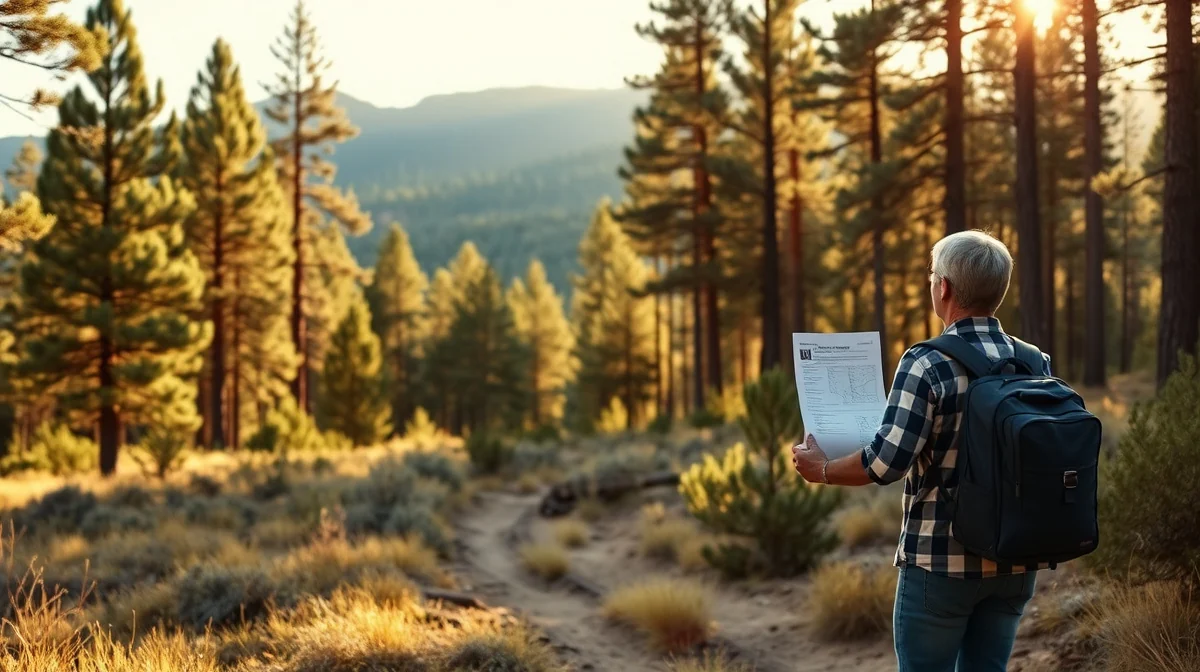
Here is where rim-country land gets its own flavor. A lot of local parcels see recreational use before anything is ever built — the family camps on it, folks hunt it, friends ride off-road across it, someone parks an RV for the summer. Every one of those activities brings people onto your land, and people bring liability.
If you allow — or even just do not prevent — camping, hunting, or off-road riding on your parcel, your exposure goes up, and your coverage needs to account for it. Tell your agent honestly how the land is used. A policy priced for a parcel nobody ever visits is not the right policy for one where the whole crew camps and rides every fall. Recreational-use liability is exactly the kind of claim vacant land coverage is meant to handle, but only if the policy was written knowing that is how you use the place.
What It Costs
The most reassuring part: vacant land insurance is typically one of the cheapest coverages you can buy. Because there is no structure to protect and the main exposure is liability, premiums are usually modest — a small annual or monthly cost for a meaningful chunk of liability protection. Adding the parcel as an endorsement to an existing policy can be cheaper still.
What moves the price is mostly the liability limit you choose and how the land is used. A higher limit — the kind you would want if you allow recreational use — costs more than a bare minimum, but even substantial liability limits on raw land tend to be affordable relative to the protection. As an independent agency we can compare the standalone-policy route against the endorsement route and tell you which is the better deal for your parcel.
Rolling Land Coverage Into Your Future Home
If the plan is to build, think of the insurance as a sequence rather than a single decision:
1. Now, holding raw land — vacant land liability coverage protects you while the parcel sits. 2. When you break ground — a builder's risk policy covers the structure, materials, and construction exposure through the build. 3. When the home is finished — a full rim-country homeowners policy takes over, with the dwelling, wildfire considerations, replacement cost, and everything a mountain home needs.
Handled well, each stage hands off cleanly to the next with no gap. We keep the whole timeline in view so you are never exposed between phases — and when it is time for the homeowners policy, we already know your land, your access, and your wildfire picture.
Frequently Asked Questions
Do I really need insurance on land I'm not building on yet?
Yes, if you want to protect yourself from liability. Even empty land can be the site of an injury — a visitor, a hunter, someone riding across it — and you can be held responsible. Vacant land liability coverage pays your legal defense and any damages. Since it is usually inexpensive, it is one of the easiest risk decisions a landowner makes.
How much does vacant land insurance cost?
It is typically one of the more affordable coverages, because there is no structure to insure and the exposure is mainly liability. The exact cost depends on the liability limit you pick and how the land is used, and adding it as an endorsement to an existing policy can be even cheaper than a standalone policy.
What's the difference between vacant and unoccupied?
Vacant land is raw, empty land with no structures — the classic parcel scenario. Unoccupied usually means a property that has a building on it but no one currently living there. They are different risks with different coverage, which is why insurers are precise about the terms. And once you start building, you move into builder's risk territory entirely.
I let people camp and ride on my parcel — does that change anything?
It does. Recreational use — camping, hunting, off-road riding — brings people onto the land and raises your liability exposure. Tell your agent how the parcel is actually used so the policy and limits fit. That is precisely the kind of exposure vacant land coverage is built for. Call us at 844-967-5247 and we will get your land covered right, from raw parcel through the day you move in.
Want this handled by a local agent?
One application, multiple markets compared — including the specialty carriers that write the pines.